
More from the Ramsons patch...
A moth, a longhorn beetle, and more hoverflies

Last night I put together a post that I had intended to be this one - a brief look at the patch of Ramsons I noticed after seventeen summers of driving past them. It turned into a longer look at Portevinia maculata, the Ramsons Hoverfly, a fairly small and otherwise unremarkable fly that is only ever found where Ramsons are growing. By the time I’d added more images of said hoverfly than was possibly necessary, the original post had become far too long to shoehorn any more photographs into. At least, if I had tried, Substack would never have sent it out as a newsletter (which would have hardly mattered in the greater scheme of things, but I like to try and do things properly).
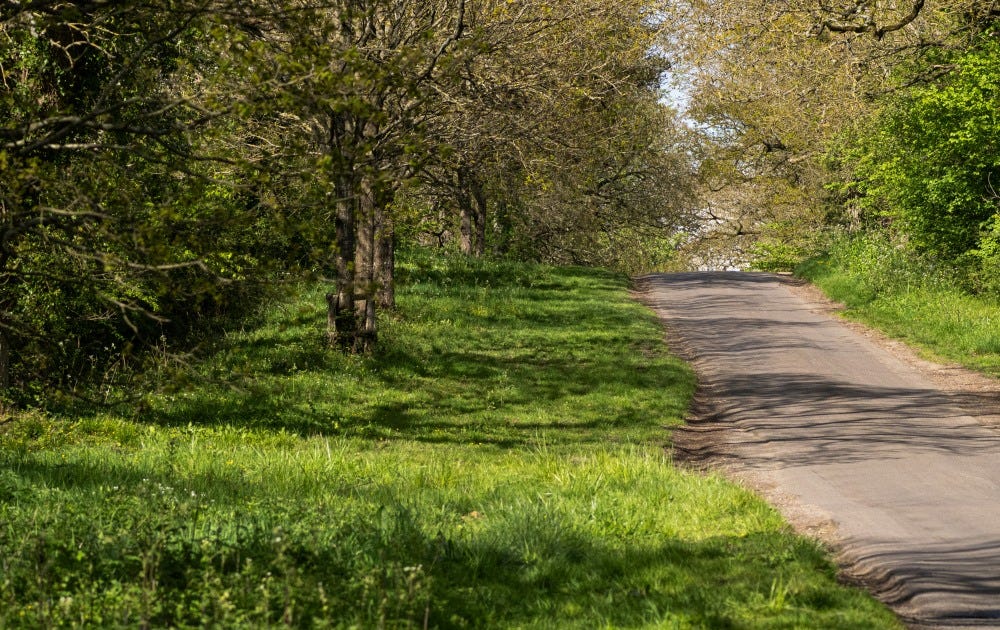
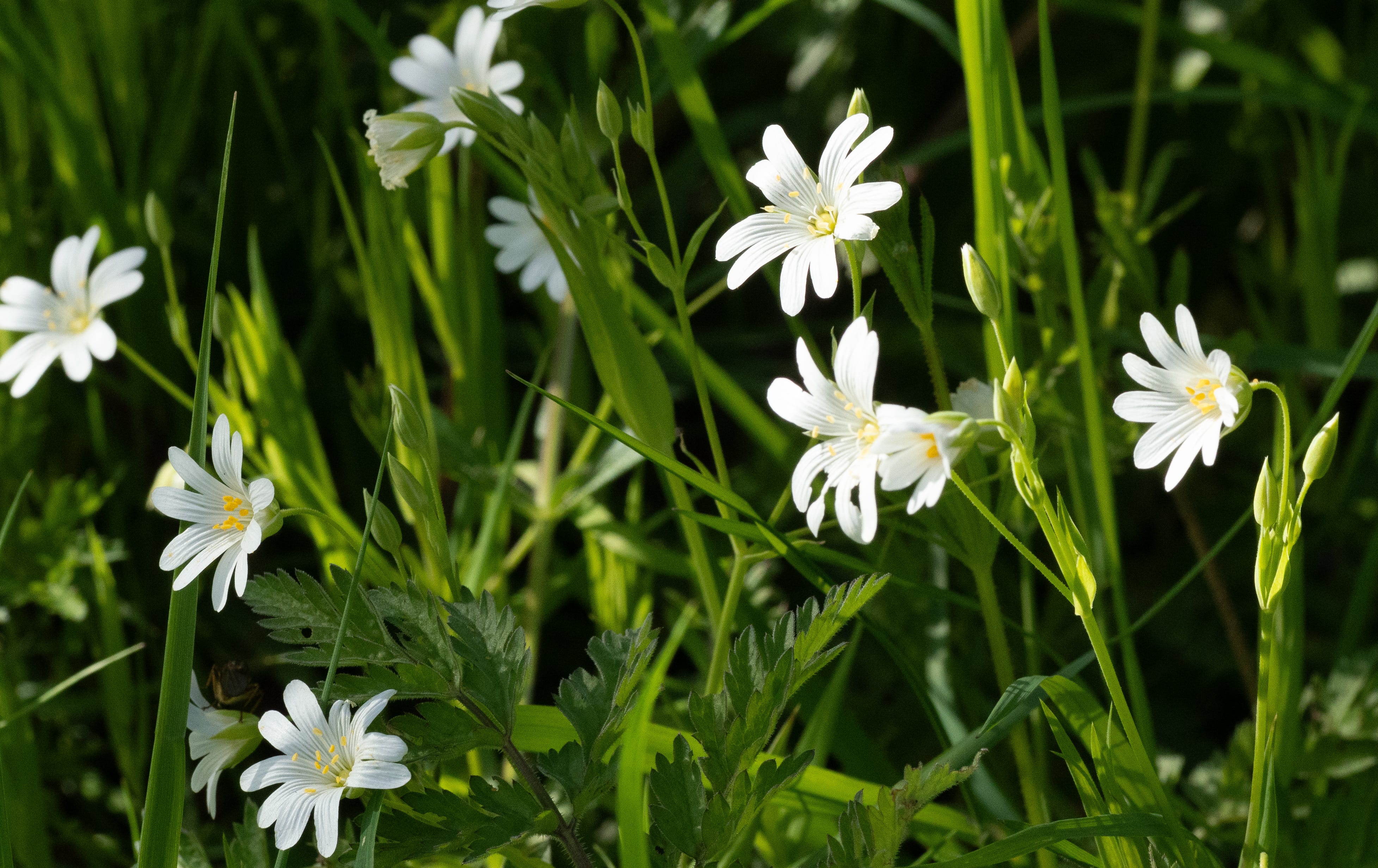
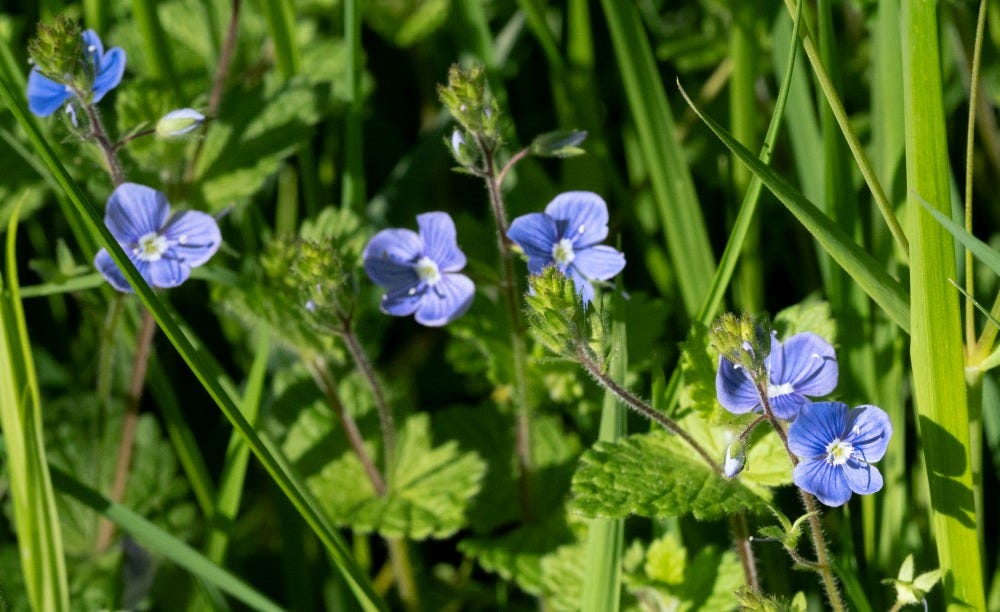
So, here are some more wonders from a relatively tiny slice of a relatively small estate. I find it incredible that so much can be found in such a small area in such a short time (I was there about an hour), but it includes two other pretty nice hoverflies, an uncommon longhorn beetle, and a moth that I never imagined seeing here.
Let’s start with the moth….
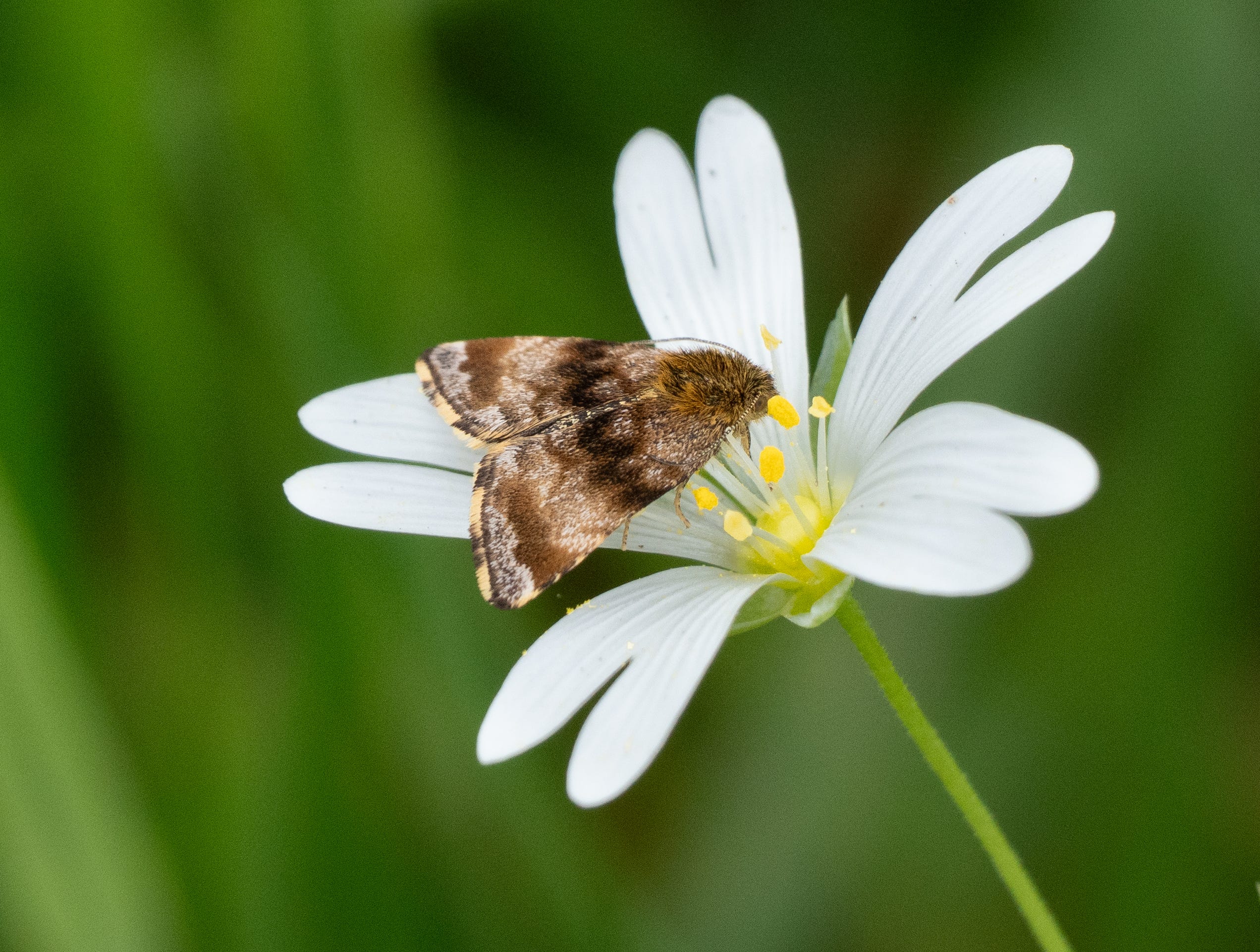
Small Yellow Underwing Panemeria tenebrata
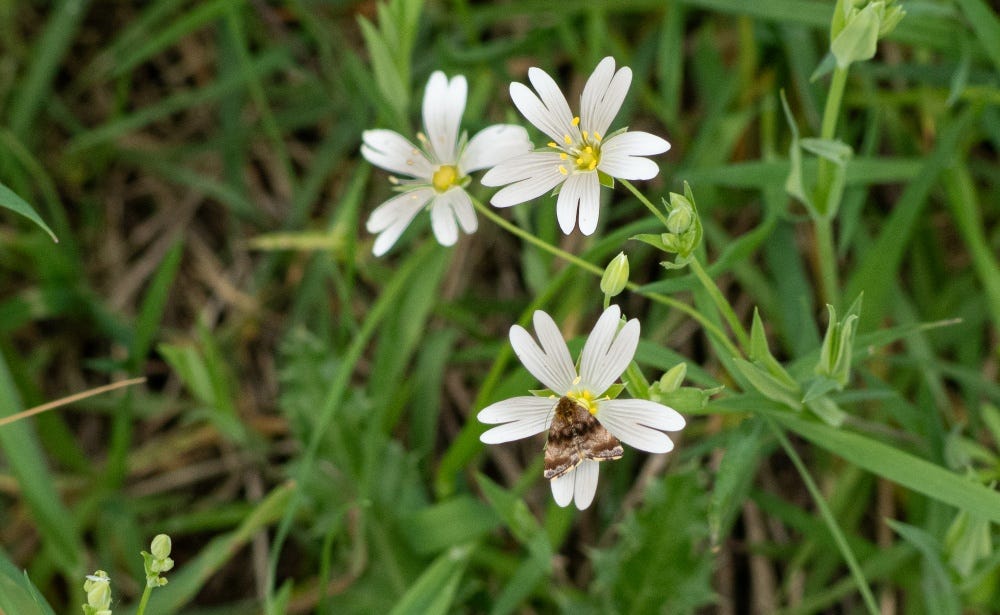
The Small Yellow Underwing is a very small macro moth. In the image above and in the header it is on a Greater Stitchwort, which is itself not a large flower. A day-flying species, this lovely moth only flies when it’s sunny and dry (which makes perfect sense, why fly when it’s cold and wet?) and is typically found in meadows, grassy downland and other open areas. Which obviously includes a Ramsons patch on ‘Chalfield Hill’. I would have completely missed this moth if I hadn’t happened to have been walking very slowly looking down for hoverflies. One of those delicious and unexpected ‘nature moments’ that put a smile on your face…
Umbellifer Longhorn Beetle Phytoecia cylindrica
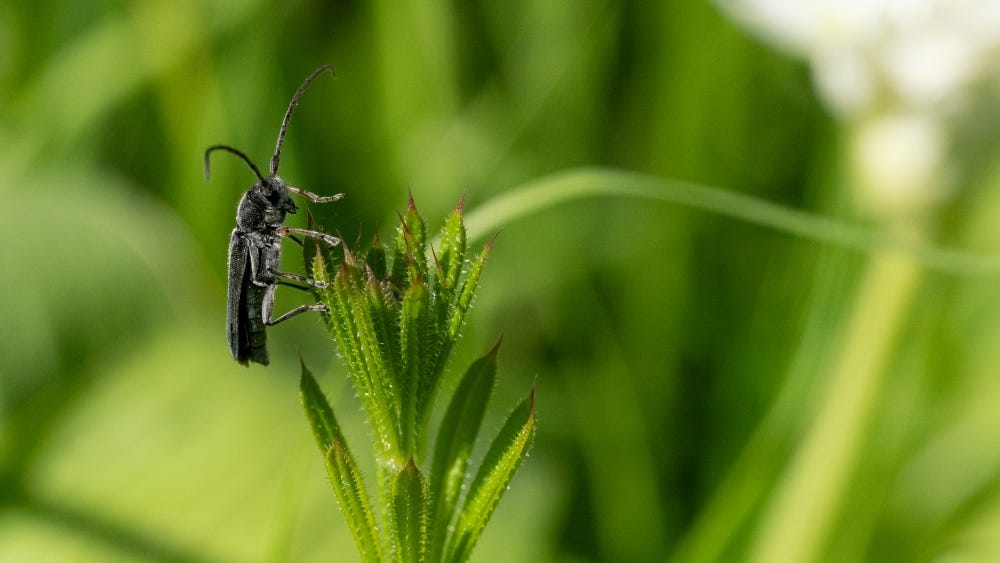
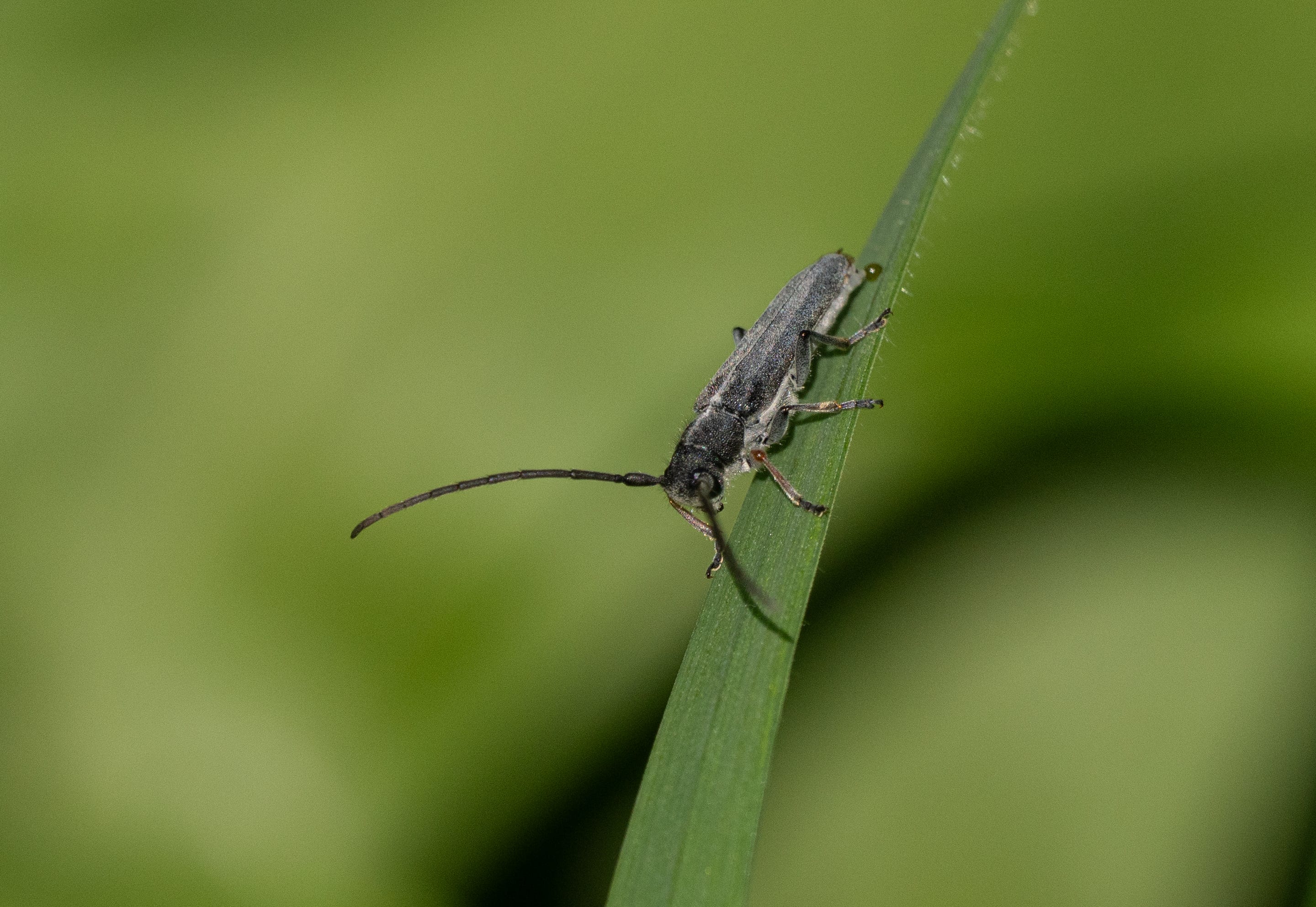
A famous Biologist, J.B. Haldane., once quipped that if there if there was a Creator he had "an inordinate fondness for beetles”. That’s because Beetles (Coleoptera) make up about 40% of all insect species and 25% of all known animal life forms. It is not possible for a mere mortal to learn them all. British longhorn beetles are another matter: there are around 70 or so, and they are really quite striking looking. At least, most of them are. The Umbellifer Longhorn - well, maybe not so much. But I’d never seen one before. It has an almost exclusively southerly distribution and is considered ‘uncommon’. So one wandering around the Ramsons patch on Great Chalfield was good enough for me…
Cheilosia albitarsis/ranunculi agg
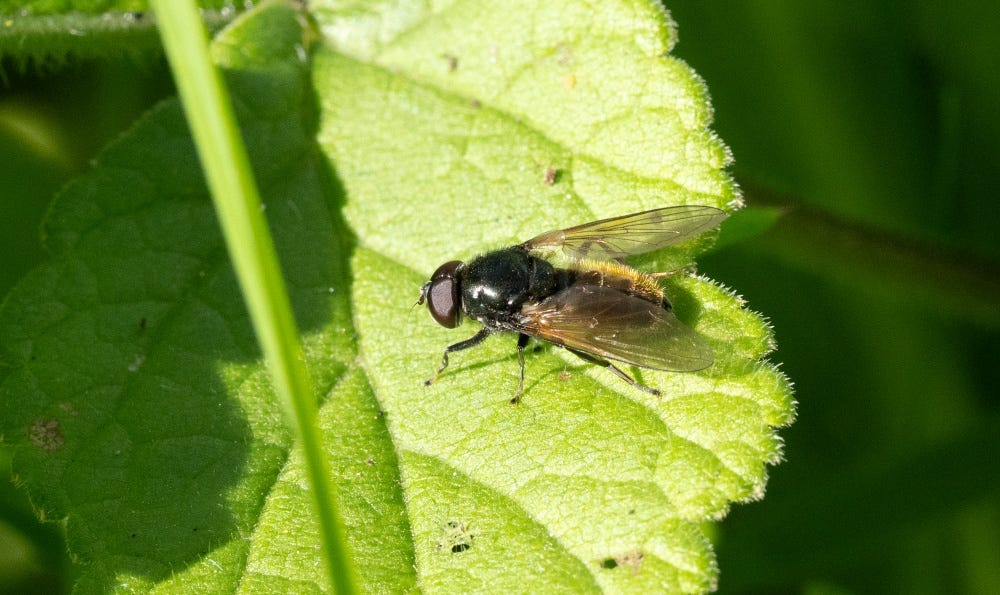
If Portevinia maculata is not the most spectacular of British hoverflies, it is positively dolled up compared with many of the Cheilosia. Some, like this one, can’t even be identified to species (both C. albitarsus and C. ranunculi are often found in damp meadows, marshy areas, woodland clearings or well-shaded verges and both are associated with buttercup). Yet, I still find something about this shiny black hoverfly compelling. If I ever work out what, I will come back and edit this post…
Batman Hoverfly Myathropa florea
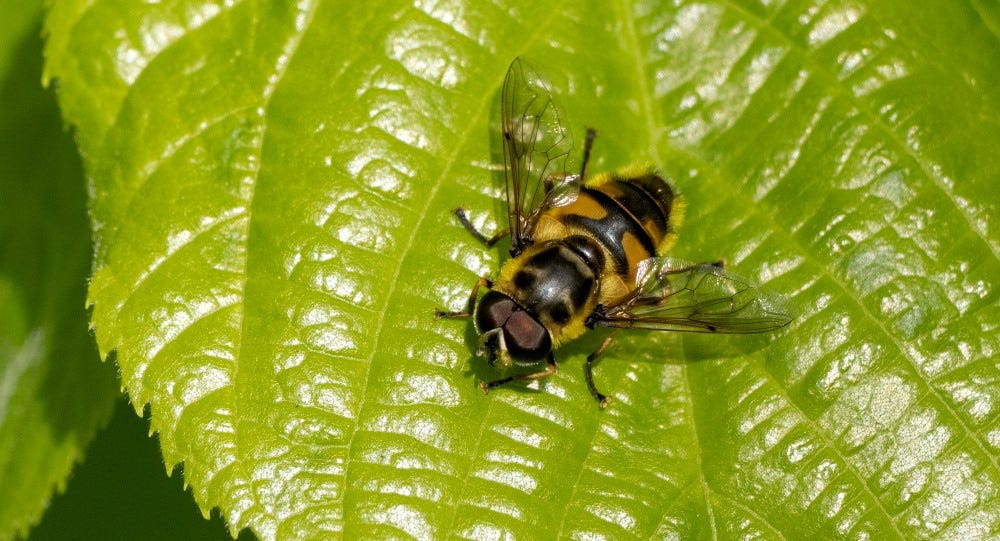
Okay, now we’re talking. This is what hoverflies are supposed to look like: yellow and black with big red eyes. M. florea’s common name, the Batman Hoverfly, is meant to reference the shape of the dark patch on the thorax which in the image above looks nothing like the famous Gotham ‘bat signal’ but in some photos - yeah, perhaps. Anyway, this is a common species from May onwards, and will be in most gardens across Great Chalfield - and buzzing about a Ramsons patch in the sunshine too.
Tessellated Dance Fly Empis tesselata
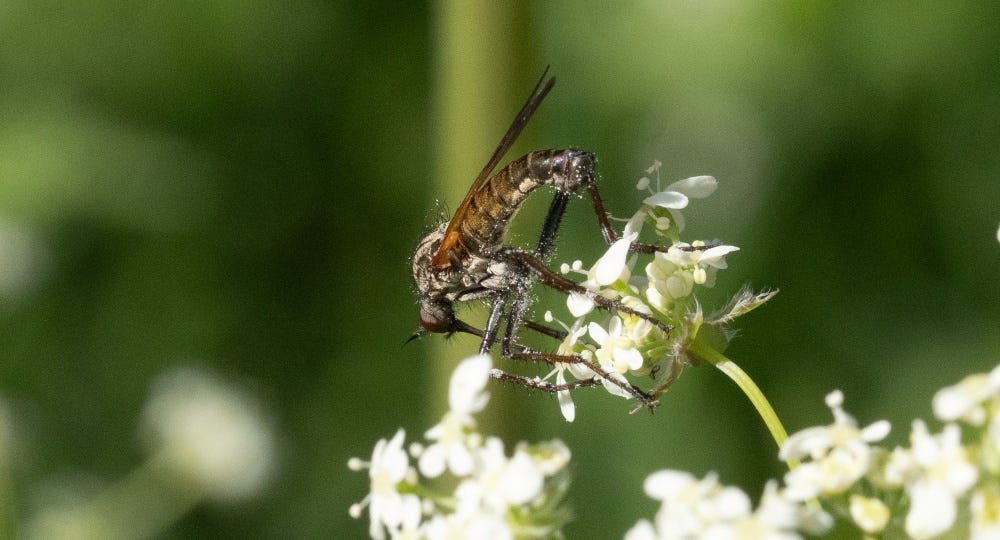
The largest of its genus, this common fly feeds on nectar but it is also a predator and catches other insects using its long, pointed proboscis to pierce their bodies. Male E. tessellata present the dead insect as a 'gift' to the female before mating takes place. I typically see these flies on umbellifers like this cow parsley throughout the summer.
Gooden’s Nomad Bee Nomada goodeniana
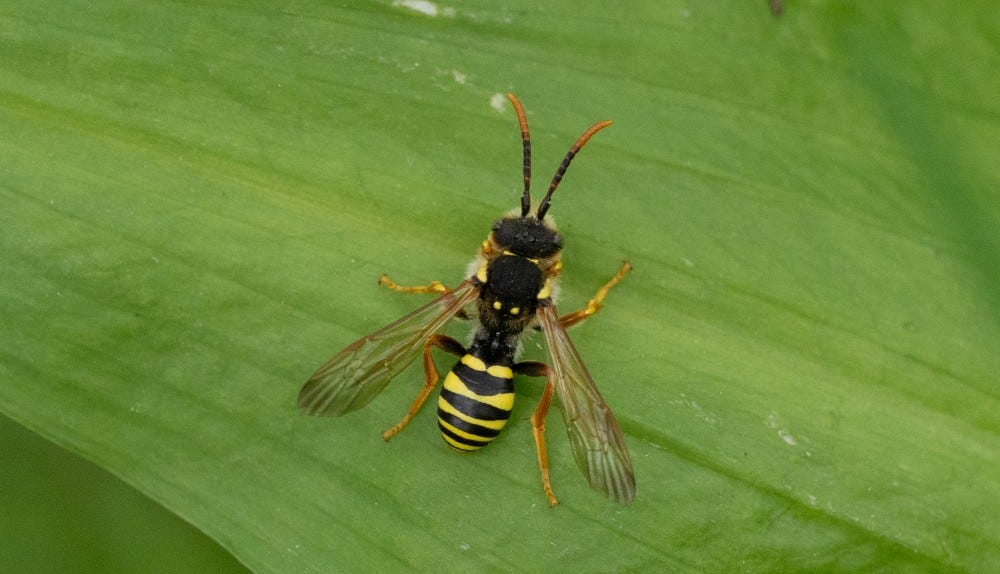
Nomad bees seem to be extremely common this year. It could be that I’m just looking more closely, but everywhere I’m looking I am seeing nomad bees, and commentators on Facebook are saying the same. Many are impossible to identify in the field, but Gooden’s Nomad is relatively straightforward. It is one of two common, large-ish nomads with a black and yellow-marked abdomen and can be separated from the other (N. marshamella) by the complete yellow band across tergite two, and yellow rather than brownish tegulae (the protective ‘shoulder’ covers for the wing base joints). It typically flies from April to June but can show an occasional second generation, and uses hosts including Andrena nigroaenea, A. nitida, and A. thoracica.
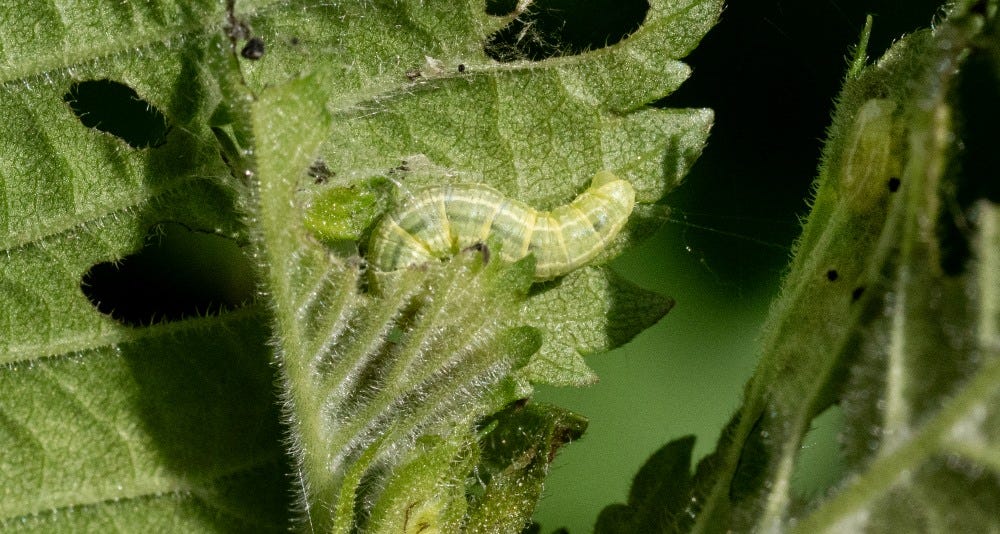
And because I took these photos, I may as well post them here too…
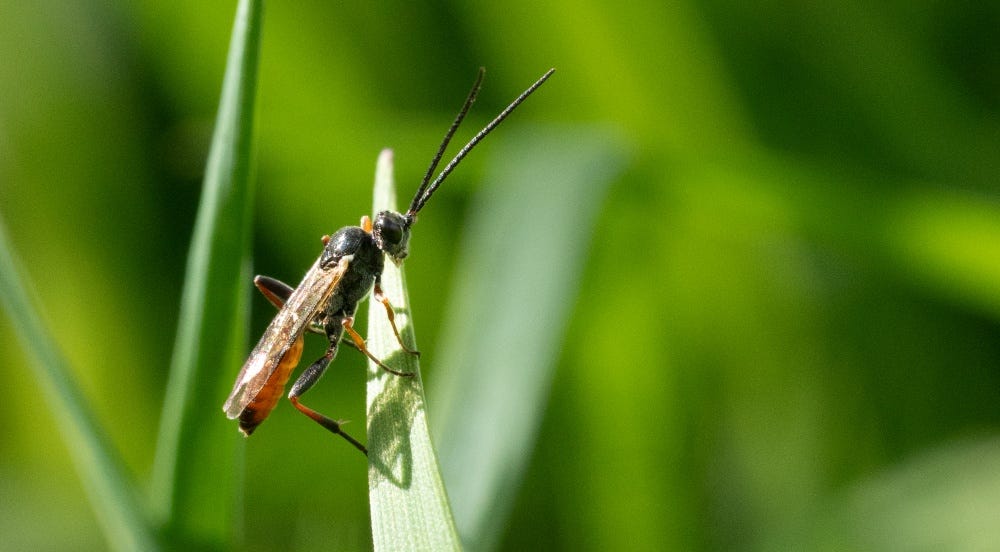
That is quite probably enough ‘from the Ramsons Patch’ (imagine I’m saying that with a delightful country burr while sucking thoughtfully on a favourite briar pipe). Quite a wonderful hour or so. I will go back and try again soon….